
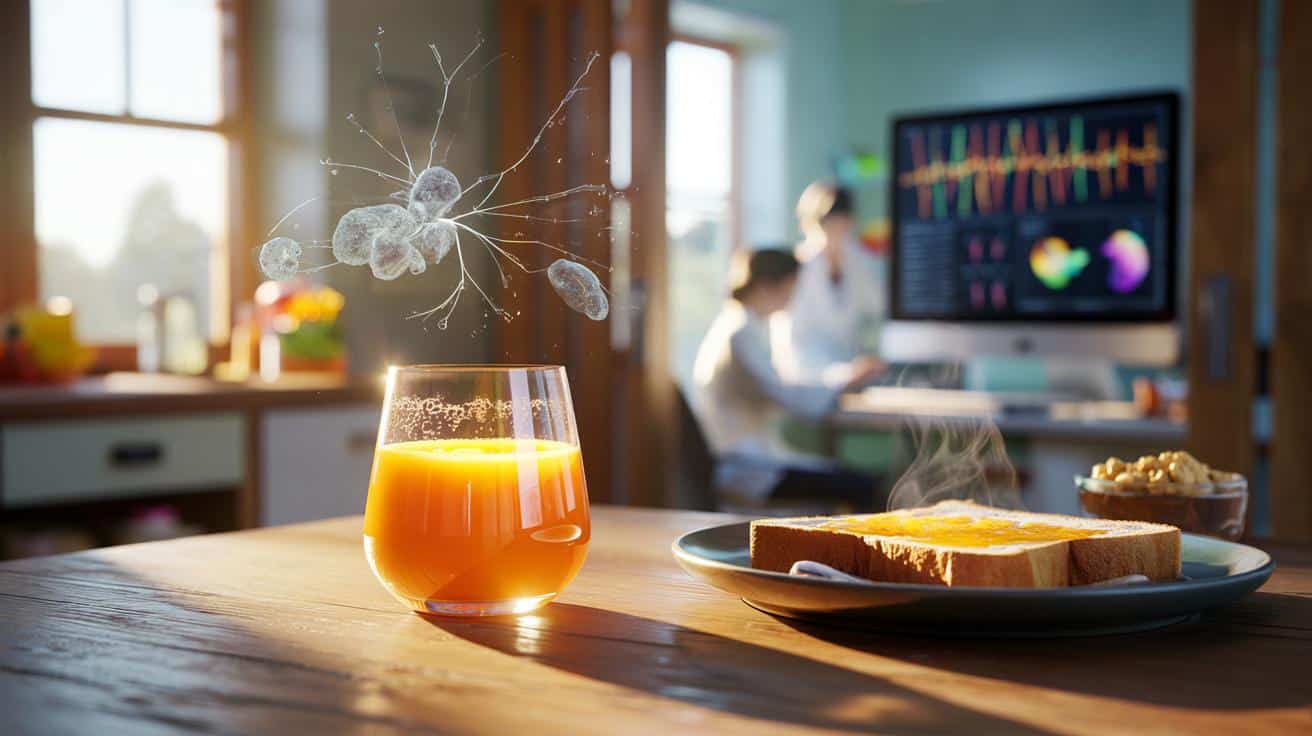
A new wave of nutrigenomics research suggests that a small glass could rewrite activity across the body’s defence network, nudging inflammation, antioxidant defences and antiviral readiness. Not a miracle. A signal.
The kitchen light was still grey when the first glass hit the table. Steam from the toast, a radio murmur, the quiet clink of a spoon against ceramic. I watched the orange juice glow like a tiny sunrise and thought about winter colds, crowded trains, that long cough that never quite leaves. In a lab a few miles away, scientists were scrolling through jagged lines of RNA data, the daily mess of human biology turned into graphs. I took a sip. They watched genes flicker on and off. It felt eerie and intimate, like two rooms connected by a wire no one sees. It’s only juice, you think, and yet something is listening. Your glass is louder than you think.
What the new science actually found
In plain terms, the research tracked what happens in your blood after a real‑world drink. Volunteers arrived, fasted, had blood drawn, then drank orange juice. More blood was taken a few hours later. Using genome‑wide tools, the team mapped which genes in **immune cells** rose or fell. The result was startling: not a handful, but **thousands of genes** shifted activity, touching pathways that manage inflammation, oxidative stress, and the choreography of early immune response. Food, acting like a message.
Think of a choir changing key mid‑song. Within hours, white blood cells adjusted how they talk to each other. Signals linked to NF‑κB – a classic inflammation switch – looked quieter, while antioxidant guardians seemed more alert. Some antiviral flags, the sort that prime you for daily skirmishes with bugs on buses and door handles, appeared sharper. This isn’t the cinematic “boost” of immune myths. It’s subtler: a retuning of the system’s sheet music, enough to matter across many tiny moments, the way weather, not a storm, shapes a season.
Why would juice do that? Citrus carries fast vitamin C, but also plant compounds that behave like courteous gatecrashers in cell signalling. Flavanones such as **hesperidin** interact with receptors, enzymes and transcription factors. They don’t bulldoze; they nudge. Sugar is there too, which would normally push glucose and insulin around. The trick seems to be the whole matrix – vitamin C, flavanones, potassium, acids, even pulp fibre – arriving together. Your cells sense the bundle, not just one molecule, and adjust their settings for a few hours.
How to turn a glass into a helpful signal
Keep the dose small and strategic. Around 150–200 ml – a modest tumbler – alongside food. Pair it with protein or healthy fats, like eggs, skyr or nut butter on toast. That slows the sugar rush while letting the flavanones and vitamin C do their whispering. Choose a juice with pulp for a smidge more fibre and phytonutrients. Freshly squeezed or not‑from‑concentrate tends to hold more of the delicate compounds. Morning works well, or after a workout when muscles are hungry and blood flow is high.
Try not to sip it alone like a soft drink. That’s when glucose spikes and the signal gets muddy. Avoid supersized glasses and bottomless brunch refills. We’ve all had that moment when a litre disappears across a lazy Sunday and you wonder where it went. Listen to your body’s pace. If citrus bothers your stomach, take it with food, or swap days. Let’s be honest: nobody actually does that every day.
Build a rhythm that fits your life, not a rulebook. Two or three small glasses a week, folded into real meals, can be enough to send that gentle nudge to your immune network without turning your diet into a sugar carousel. If you love the ritual, keep it bright and simple. Rotate with whole oranges, berries, or kiwi to broaden the nutrient “vocabulary” your cells hear.
Your immune system doesn’t just count calories; it reads context. Food is information, and timing is part of the message.
- Portion: 150–200 ml per serving, with a meal.
- Type: with pulp, preferably not‑from‑concentrate.
- Pairing: add protein or fats to soften the glucose rise.
- Frequency: a few times a week beats daily gulps.
- Swap‑ins: whole citrus, berries, peppers for vitamin C rotation.
A bigger idea: food as a message, not a miracle
Step back and the picture turns more human. The study doesn’t grant orange juice a cape. It shows that what we drink and eat speaks directly to the levers of immunity, and it does so fast. The question isn’t “Will this cure colds?” It’s more like “What tone do I want to set for my body today?” A small glass can tilt you towards calmer inflammation and sharper antioxidant balance when part of a sane plate. Spread that across a season of better sleep, movement, fresh air and vegetables, and the signal amplifies. Strip it away and chug sweet liquids on an empty stomach, and you drown the very song you’re trying to hear. The daily art is choosing signals that help, at portions that add up to a life you can actually live and share. That’s a conversation worth passing around the table.
| Key Point | Details | Interest for the reader |
|---|---|---|
| Orange juice modulates gene activity | Transcriptomic data show shifts in thousands of genes in immune cells within hours | Explains why a small glass can influence inflammation and defence |
| Quality, portion and timing matter | 150–200 ml with food, pulp preferred, not‑from‑concentrate if possible | Simple tweaks turn a sugar hit into a helpful signal |
| Context beats magic bullets | Pair with protein/fat; rotate with whole fruit; fit it into a broader routine | Actionable steps that feel doable and sustainable |
FAQ :
- Does orange juice “boost” immunity?Not in the superhero sense. It appears to retune immune gene activity for a few hours, nudging inflammation and antioxidant responses.
- How much should I drink?A small 150–200 ml glass with a meal is a practical sweet spot for most adults.
- What about the sugar?Juice carries natural sugars. Pairing it with protein or fats and keeping portions modest helps steady blood glucose.
- Freshly squeezed or from concentrate?Fresh and not‑from‑concentrate often retain more delicate flavanones and aroma compounds, especially with pulp.
- Is whole fruit better?Whole oranges add fibre and more chewing time, which can be gentler on glucose. Alternating juice with whole fruit gives you the best of both.







Tiny glass, big gene chatter—wild!