
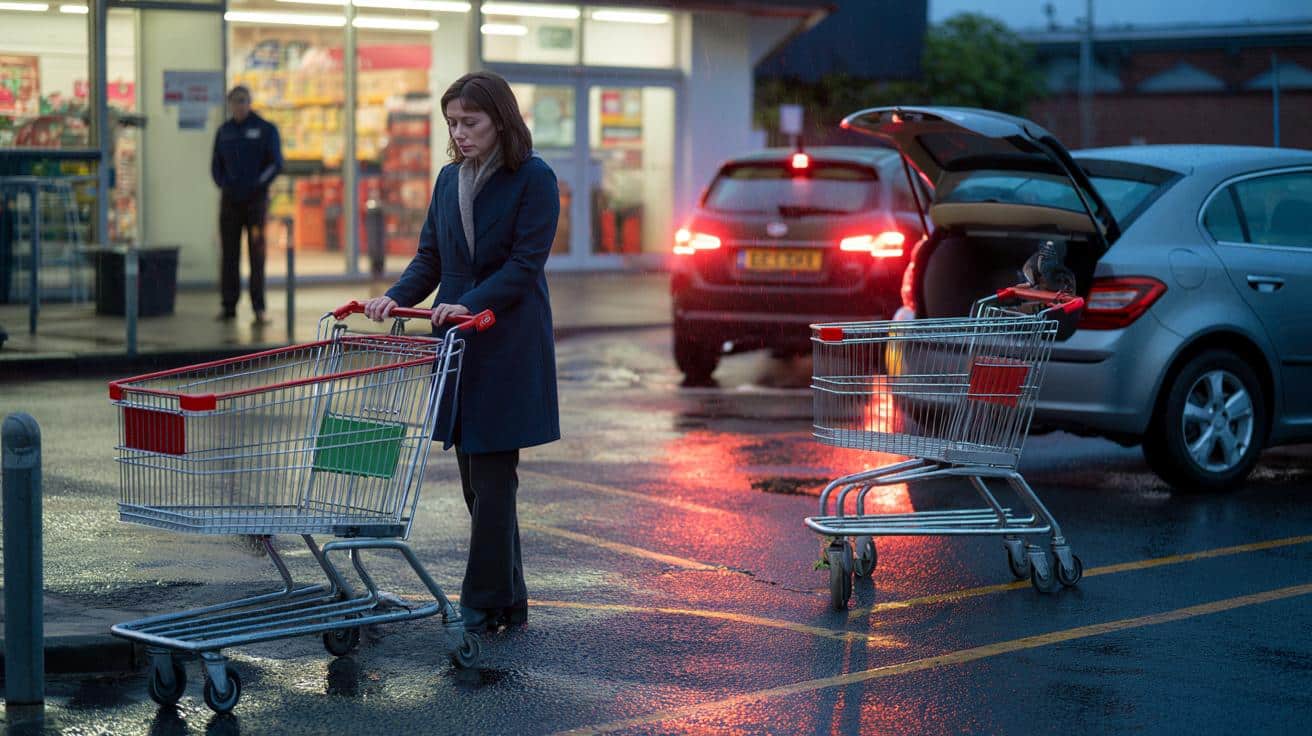
That’s the point. Returning a shopping cart is a tiny, optional act — a civic nudge with no referee. And experts say the choice you make in that car park hints at the kind of person you are when nobody’s watching.
It was a drizzly Tuesday when I watched it happen: a trolley, abandoned on a wind-swept island of painted concrete, gently rolling towards a Mini. A woman in a navy coat jogged, caught it with a laugh, and steered it back to the bay, hand on the handle like a promise. Two bays down, a man loaded bottled water into his boot, flicked the trolley aside with his hip, then drove off without looking.
We’ve all had that moment when the engine’s on, the rain spits, and you weigh thirty seconds of effort against the warm hum of going home. It isn’t dramatic. It isn’t heroic. It felt oddly intimate, watching strangers choose. A behavioural Rorschach in stainless steel. A small test hides in plain sight. A smaller answer decides.
What your trolley habit might reveal
Psychologists often look to low-stakes choices to spot stable traits. The shopping trolley is almost perfect: no penalty for slacking, a minor benefit for everyone if you pitch in. Returning it tends to correlate with **quiet rule-followers** — people high in conscientiousness and agreeableness, with a pinch of self-control and future focus. It hints at an inner script that says, “I’m part of this place,” not just a passer‑through.
Spend ten minutes in any British car park and you’ll see it unfold. Parents wrangling toddlers, students in trackies, a retiree with careful steps and a determined set to her jaw. A quick glance, a push, a click of metal on metal. Then there’s the artful parkers: trolley nudged onto a kerb, half blocking a space, poised to drift. The whole scene moves like weather. Some bring the sun.
There’s logic beneath the drama. Prosocial acts that are voluntary, visible, and low-cost often signal deeper habits: planning, impulse control, a bias for cooperation. The trolley also puts “diffusion of responsibility” on trial. You know someone will tidy it eventually — a staffer, the next shopper — and the brain plays accountant. People who return it report a small “warm glow”, the brain’s way of reinforcing tribe-friendly behaviour. Tiny act. Big story.
Turning a tiny act into a daily signature
There’s a neat trick I picked up from a store manager in Kent: keep a hand on the trolley until it clicks into the bay. Don’t let go sooner. That one rule stitches the return into your natural exit. Park near a trolley corral if you can, or make the return your “reset ritual” before the drive home. It’s thirty seconds, not a quest.
Common snags usually aren’t laziness, they’re friction. Rain. Kids. A wobbly wheel that fights you like a shopping-centre shopping cart gladiator. Break it down: bags in, doors locked, trolley back, then go. If a stranger is loading nearby, offer to chain yours with theirs and share the short walk. Let’s be honest: nobody really does this every day. The point is to make “most days” the norm and let the mood carry you the rest.
One organisational psychologist I spoke with framed it simply:
“You’re not returning a trolley. You’re practising the identity of someone who finishes things and leaves places better than they found them.”
- Make it visible: kids notice. They copy what they see.
- Shrink the effort: park near a bay; pick a light push.
- Stack it with a cue: keys in hand means trolley return next.
- Reframe the reward: enjoy the tiny click — it’s closure.
- Use a buddy system: return two trolleys when you can.
The science, the stories, and the bigger picture
The trolley test lives where civility meets psychology. It’s a public-goods problem without the grim lecture: no fines, no medals, just micro-decisions adding up to a smoother day for strangers. Some experts view it as a proxy for “generalised trust” — the belief that others will play fair, so you do too. Others see it as a practice ground for self-regulation. Either way, the metal basket tells on us, gently.
When communities return more trolleys, staff spend less time corralling and more time helping at tills, cleaning spills, or opening extra lanes. That cascades into fewer scratches on cars, fewer blocked spots, and a car park that feels less like a hassle zone. There’s no sermon in that. Just fewer tiny frictions, and a place that works the way you wish more places did.
And yes, there are edge cases. Mobility issues. A sleeping baby. A sudden downpour that soaks you to the bone. Grace matters. The trolley test isn’t a morality play; it’s a pattern. What counts is the curve of your choices over time. Back in that drizzly car park, the woman in the navy coat didn’t make a speech. She just made a habit. **Small, repeatable, contagious.**
How to build the habit without turning into a saint
Start with environment, not willpower. Choose a spot within thirty steps of a bay. Turn the return into a beat in your exit rhythm: boot shut, trolley back, seatbelt on. If the corral’s far, chain yours to a cluster near the entrance and tell the next shopper, “Take mine, I’ll grab yours.” It’s a five-second swap that spreads the load and keeps the flow.
Reduce friction even more by prepping before you push off. Bags arranged, fragile items secured, receipt stashed. Then move. If you’re with kids, narrate the move like a game: “Ready for the click?” That tiny sound sells the finish. Rain? Hood up, brisk pace, laugh it off. You’re not auditioning for sainthood, you’re tidying the stage for the next act. **A public-spirited habit beats a perfect one.**
There’s a quiet social signal in the mix, too: people who return trolleys tend to make eye contact, offer a half-smile, and melt a bit of British awkwardness. That softens the car park more than a sign ever could.
“Civility isn’t grand. It’s granular,” a veteran store supervisor told me. “The trolley is just one of the grains.”
- Plan the path: map your last 60 seconds before ignition.
- Use micro-rewards: play your favourite 20‑second track clip as you walk.
- Borrow momentum: return a second trolley on your way back.
- Name the feeling: call it your “click and go.”
- Forgive misses, repeat tomorrow. Habits survive on grace.
The cart as a mirror, not a verdict
This isn’t about shaming people who don’t return trolleys. It’s about noticing what tiny, voluntary acts do to our sense of self — and to the little ecosystems where we live. The car park is a thousand small negotiations: lanes, glances, give‑ways, trolley arcs. When you return yours, you add one calm note to a place that could always use more calm.
So the question is less “Are you good?” and more “Which version of you shows up when no one’s keeping score?” A trolley becomes a mirror for that, wobbly wheel and all. Some days we pass the test without thinking. Other days we don’t. The average of those days, across a town, becomes the mood of the place. That’s the story worth telling, and retelling, bay by bay.
| Key Point | Details | Interest for the reader |
|---|---|---|
| Voluntary acts signal traits | Returning a trolley often aligns with conscientiousness, agreeableness, and self-regulation | Understand what your small choices might say about you |
| Friction beats willpower | Park near bays, keep a hand on the trolley until it clicks, stack cues | Practical ways to make good habits easy |
| Community ripple effect | Fewer stray trolleys free staff time and reduce micro-frictions | See how one tiny act improves everyone’s day |
FAQ :
- Is returning a shopping trolley really a personality test?Not a formal one, but it’s a revealing micro-choice: low cost, no enforcement, public benefit.
- Which traits does it most often reflect?Conscientiousness, agreeableness, and a bias for cooperation — plus a bit of impulse control.
- What about people with mobility limits or kids?Context matters. The “pattern over time” tells more than any single wet, chaotic afternoon.
- Does it change anything for the store?Yes — fewer stray trolleys mean fewer blocked spaces and more staff time for customers.
- How can I make the habit stick?Reduce friction: park near a bay, build a 30‑second routine, and enjoy the click as your finish line.




I love the framing of ‘civic nudge’ — the trolley as a public-goods micro test. But I’m curious: do we over-interpret a single low-stakes act? Diffusion of responsibility and warm-glow effects are context-heavy. I’d like to see data controlling for rain, distance to corral, cart locks, time pressure, kids in tow. Otherwise we’re maybe measuring situation more than trait. Still, it definately nudges me to keep a hand till the click.
I return the cart for the tiny metal click—it’s my supermarket dopamine hit 🙂 Also saves my bumper from rogue trolleys.