
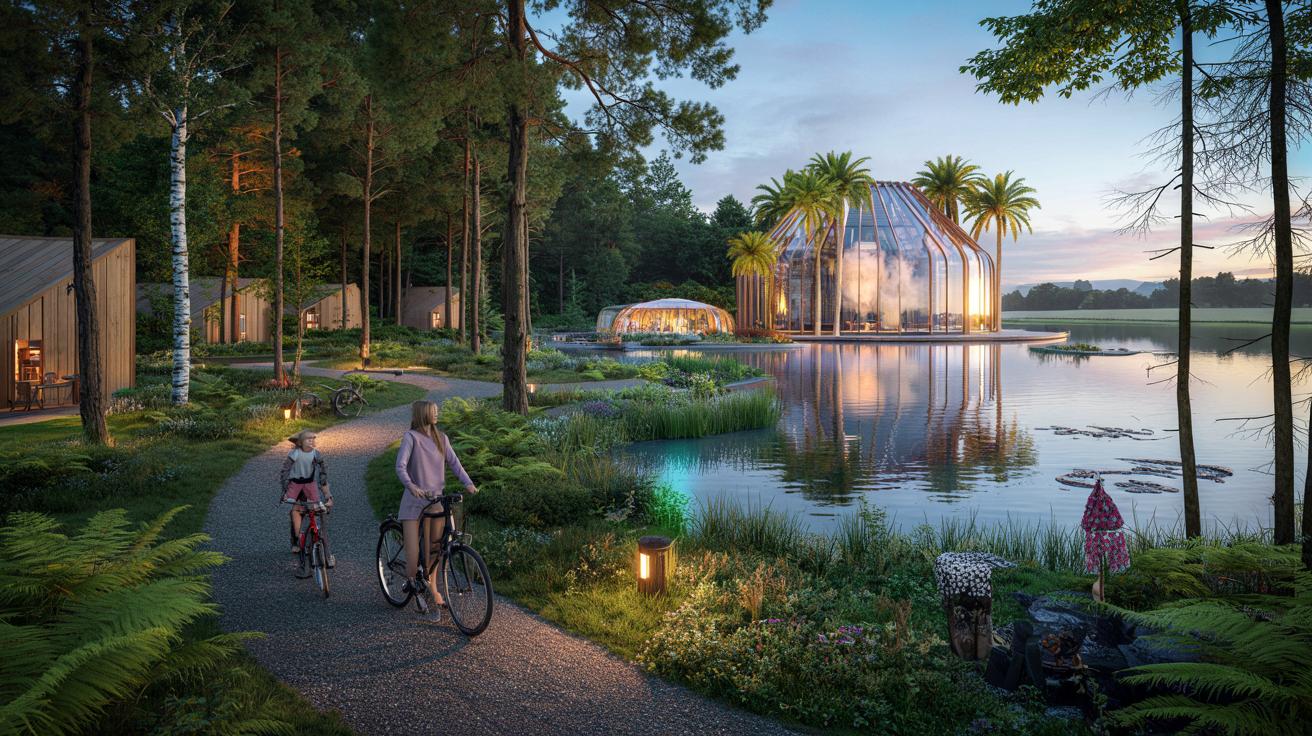
After ten years of waiting, the UK is edging towards a brand-new Center Parcs — the first since Woburn Forest opened in 2014. The promise is simple: forest paths, car‑free calm, a huge glass‑roofed water world, and a much‑needed boost for a local economy that wants year‑round guests.
The air smells of cold bark and last night’s rain. Two dog‑walkers argue, half‑laughing, about whether a new resort here would mean more bikes or more buggies on the trail.
Somewhere nearby, a farm gate creaks and a tractor coughs awake. It’s ordinary and English and slightly sleepy, the kind of place where a weekend can stretch like a cat in sunlight. And that’s the pull.
A decade on from its last UK opening, Center Parcs is preparing to plant another forest village. The question is where and when.
New trees, new jobs, same Center Parcs promise
The outline is taking shape: a sixth UK village with around 1,500 lodges, a glassy lake, and that signature **Subtropical Swimming Paradise** steaming under palms. Think car‑free lanes, bikes leaning against cabins, and Aqua Sana spa lights flickering like fireflies. The investment figure being circulated by industry watchers sits in the £400m–£500m bracket.
What ignites local chatter isn’t just holidays. It’s work. A project this size usually brings 1,500–2,000 construction roles and roughly 1,000 permanent jobs once open, from lifeguards to arborists. Suppliers win, too: bakers, laundry firms, shuttle drivers, gardeners. In places where the shoulder season can be brutal, an all‑weather resort steadies the heartbeat.
There’s also the UK holiday trend that refuses to fade. Families are booking closer to home and earlier in the year. Occupancy at existing villages has sat enviably high, nudging the mid‑90s in busy weeks, with peak weekends snapped up months in advance. A fresh site relieves pressure, spreads demand, and nudges prices into a broader range.
Where it lands, and what that means on the ground
The location shortlist is focused on woodland with strong transport links, typically 400–600 acres with scope for a central lake. Southern and midland counties tick those boxes, but it comes down to ecology, neighbours, and a council that wants the deal. Any final pick goes through months of studies, from bat flights to groundwater flow.
One lesson is already baked in. A mooted West Sussex plan was shelved years ago after concerns about ancient trees and sites of special interest. That pause sharpened the process: more rigorous early surveys, more back‑and‑forth with wildlife groups, more scrutiny of roads and night‑time lighting. Progress now happens in daylight, with fewer surprises later.
Expect a familiar build‑out if planners nod. Wooden lodges in staggered clusters, cycling loops fanning from a glass‑roofed plaza, a curving waterpark with slides that grin like parrots. Most guests come for three or four nights. They spend on‑site, but they also spill into nearby farm shops and pubs, which is one reason chambers of commerce tend to lean in.
Promises meet pressure: the environmental equation
The modern calculation is blunt: you don’t get a new forest resort past today’s gatekeepers without a measurable biodiversity gain. That means planted native woodland, managed wetlands, dark‑sky corridors for bats, and careful construction rhythms to avoid nesting seasons. It’s the *only* way the story rings true.
There’s also the texture of life once the gates open. Car‑free lanes mean cleaner air and safer play for kids wobbling on their first bike. Heat pumps, on‑site renewables, and careful waste streams cut the footprint where they can. Guests notice the small stuff—owl boxes, deadwood left for beetles, reedbeds that hum at dusk.
Will everyone be happy? No. Some residents will worry about traffic and path access, others about lodge lights on winter evenings. That’s why the pre‑application phase matters: months of open‑door sessions, maps on trestle tables, and actual listening. One villager put it to me with a shrug: “If you’re building in a forest, grow a thicker skin.”
How to make the most of a brand‑new Center Parcs
Book early, then book soft. Grab your dates the day sales open, but leave the activities flexible. The sweet spot for value is often term‑time midweeks, with quieter pools and easier restaurant tables. Set a simple rhythm—morning swim, long ride, late‑afternoon sauna—so you don’t spend the trip jogging between clock‑times.
Pick your lodge like you’d pick a seat on a train. Near the plaza if you’ve got buggies. Edge‑of‑map if you crave silence. Bring your own bikes and a small torch for dusky paths. And yes, order groceries to your door on arrival; it’s not glamorous, it just _works_ after a long drive.
We’ve all had that moment when you arrive somewhere lovely and instantly over‑plan it to death. Let’s be honest: nobody really does that every day.
“The best Center Parcs days are the ones with gaps,” a dad told me, towelling a child who still smelled faintly of the pool. “Leave room for weather and whim.”
- Slide your big‑ticket activity to day two, when everyone’s slept.
- Pack swimsuits on top, so you can hit the pool within an hour of arrival.
- If you want restaurants, book one dinner, keep one free, self‑cook the rest.
- Choose one treat—**Aqua Sana**, archery, or a long lunch—and protect it.
Costs, dates, and a little reality check
Prices will float with demand, as they already do. Opening‑season weekends are catnip, midweeks less so. If previous launches are a guide, entry‑level lodges will list in the low‑to‑mid hundreds for four nights off‑peak, and well north of that for prime summer. A new village can widen the range, not just shift the average.
What about dates? The planning ladder runs: consultation, application, committee, then shovels. Build time for a forest village is typically two to three years. If spades hit soil soon after approval, the earliest realistic **opening date** lands a couple of years later, with soft‑launch weeks before a fanfare.
There’s a human story threading through the spreadsheets. The chef who finds year‑round work. The teen who becomes a lifeguard and a morning person by accident. The grandparent who learns to love a gentle e‑bike. Big projects can sound abstract; they’re not, once the lights are on and the first towels are warm.
What this new village could change
The obvious shift is capacity, easing the crunch on school‑holiday weeks and giving families a fresh map to explore. The subtler shift is how a resort reframes a county’s weekend. More cyclists on lanes. A livelier farm shop on a Wednesday. A hotelier rethinking their own half‑term offer.
There’s also the social weather. Forest villages invite a kind of egalitarian holidaying—prams and wheelchairs, teenagers and grandparents, all moving at human speed. It isn’t flawless and it isn’t cheap, yet the car‑free, lodge‑in‑the‑trees idea lands with British families who want a holiday that works, not just looks good on a grid.
And the conversation will keep humming. Where the village lands matters. So do lights, roads, bats, wages, footpaths. If the balance is struck, a lot of us will one day recognise the clink of cutlery in a cabin kitchen, the fogged‑up swim bag by the door, the late‑night ride under cedar silhouettes—and wonder how we ever waited ten years for it.
| Key Point | Details | Interest for the reader |
|---|---|---|
| First new UK Center Parcs in a decade | Planned sixth village with ~1,500 lodges, lake, and waterpark | Signals fresh dates, new experiences, and more availability |
| Jobs and local spend | 1,500–2,000 construction roles; ~1,000 permanent posts; strong supplier demand | What it means for the area you live in or plan to visit |
| Planning and environment | Consultation, biodiversity gains, bat corridors, dark‑sky design | Reassurance about nature and how the resort fits the landscape |
FAQ :
- Where will the new Center Parcs be?Final site selection has not been announced publicly. The shortlist focuses on sizeable woodland with strong transport links, with councils entering early talks before formal plans appear.
- When could it open?After planning approval, build time is usually two to three years. A realistic window is a couple of years post‑approval, often with a soft launch ahead of peak season.
- How much will a short break cost?Dynamic pricing means off‑peak midweeks will be the best value. Based on previous launches, expect entry‑level lodges to start in the low‑to‑mid hundreds for four nights outside school holidays.
- What will be on site?Signature features typically include the **Subtropical Swimming Paradise**, Aqua Sana spa, indoor and outdoor sports, family dining, and miles of car‑free cycle tracks through managed woodland.
- Will it be eco‑friendly?New villages are designed around biodiversity net gain, with habitat creation, dark‑sky lighting, and lower‑carbon energy systems. Independent surveys and ongoing monitoring shape the final design.





Finally! Been waiting since Woburn 2014 for a fresh map to explore. If they keep car‑free lanes and stack the lodges around a proper glassy lake, I’m in. Kids on bikes, Aqua Sana for a quiet hour, then pizzas—simple. Just please price it sensibly and don’t cram the calendar with micro‑bookings. Can’t wait to try the Subtropical Swimming Paridise and pretend it’s summer in November.