
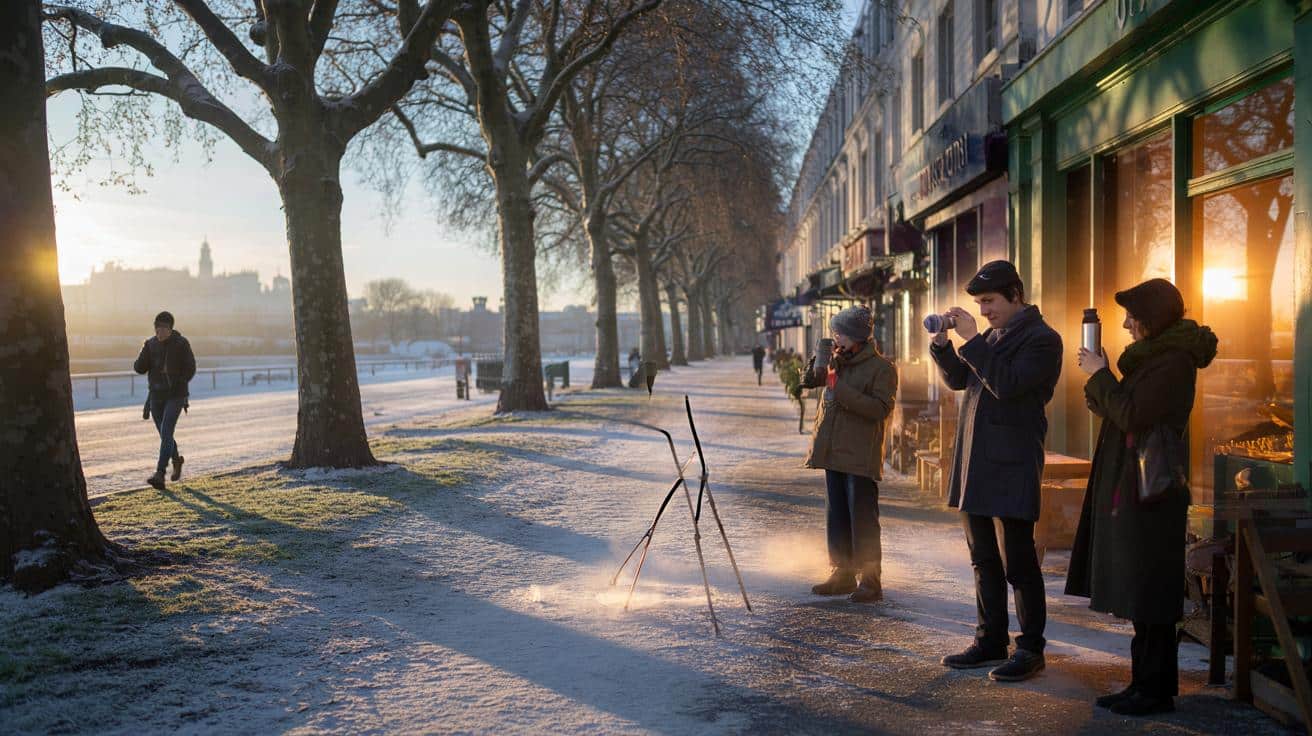
In the park, joggers ran under bare branches, their breath rising like little clouds, while shop windows pushed warm light into the street. A neighbour glanced at the sky at half three and sighed, the same ritual every year: when does this end, when does the light turn back. The calendar says winter is settling in, yet the question is more precise than seasons. It’s about one inflection point, measured to the minute. The shortest day has a timestamp you can circle in ink. It’s closer than you think.
Shortest day of the year 2025: the exact moment
The winter solstice in 2025 falls on Sunday 21 December, at 15:03 GMT in the UK. That’s the instant the Sun reaches its most southerly point in the sky, and our daylight is at its minimum. The day length barely budges from one year to the next, but the symbolism lands with weight. People light candles, gather at ancient stones, or simply take a walk and watch the low Sun glide along rooftops.
In London, sunrise hovers near 08:04 and sunset around 15:53 on that date, giving roughly seven hours and fifty minutes of day. Head north and it tightens: in Inverness, the day shrinks to about six hours and thirty-six minutes. Go the other way to Penzance and you gain precious minutes. Flip the globe and the story reverses, because for the Southern Hemisphere the same moment is the **longest** day.
Why this strange choreography? Earth is tilted by about 23.4 degrees, so our hemisphere leans away from the Sun in December and the midday Sun rides low. Our orbit is also elliptical, which skews clock time against solar time. That’s why the earliest sunset happens in early December and the latest sunrise in early January, while the true “shortest day” sits in the middle like a hinge.
How to experience the solstice without overthinking it
Pick a high spot you know, check the weather the day before, and plan a simple loop that lands you outside for sunset on 21 December. Don’t chase perfection. Let your phone’s compass tell you where southwest sits, then watch how slowly the light drains across that line.
We’ve all had that moment when the afternoon goes grey and your shoulders dip with it. On the solstice, make one tiny swap: tea by the window, a ten-minute walk at noon, a photo of the longest shadow your shoes cast. Let’s be honest: nobody tracks the Sun’s declination over coffee. Small rituals stick, grand ones rarely do.
Tradition helps. Stonehenge draws a quiet crowd at dawn, while city bridges and coastal paths become impromptu observatories. If sunrise logistics feel heavy, aim for local solar noon when shadows are shortest and the Sun is highest — in London, it’s around 11:59 GMT. Light returns in tiny steps you barely notice until one day you do.
“The solstice is a hinge in the year: the light pauses, then returns.”
- Best quick view: a hill, a roof terrace, or a south-facing window after lunch.
- Photo idea: place a coin on the pavement at noon and measure your shadow length.
- Family ritual: one candle for the shortest day, one intention for the longer days ahead.
- City hack: pick a park with uncluttered horizons; the Sun sits low, so trees will matter.
- North vs south: expect deeper twilight in northern towns; plan layers and a warm flask.
After the shortest day: what actually changes
From the moment the solstice passes, daylight starts nudging back. You won’t feel it at once. At first the change is measured in seconds, and it hides behind the latest sunrises of early January. What you notice is a softer shift: a brighter lunch hour, a stroll that doesn’t end in complete darkness by four.
The numbers catch up by mid-January, then the lift accelerates through February. Some people anchor this with micro habits — a weekly photo from the same street corner, a standing walk at noon on Fridays. Others choose an outward marker, like the first day a meeting ends in daylight. Both work because the mind needs evidence, not just a promise.
By mid-March, sunset in the UK jumps past six and your sense of time loosens again. The winter solstice isn’t a full stop. It’s a pivot you feel in the bones before you read it on a clock.
There’s a quiet solidarity to this moment, from corners of Yorkshire to flats above bakeries in Brixton. People peek outside at three and comment on the sky, thinking of holidays, seedlings, or the dog walk that’s about to be done in twilight. The science is clean — 21 December 2025 at 15:03 GMT — yet the feeling is messy and personal. Share the date, plan a small ritual, or just notice the way your street holds light at noon. The shortest day can be a test or an invitation. Which one it is depends on what you do with those few bright hours.
| Key Point | Details | Interest for the reader |
|---|---|---|
| Exact solstice moment | 21 December 2025, 15:03 GMT (UTC). UK sits on GMT in December, so the time matches the official UTC tally. | Gives a precise minute to plan a walk, photo, or small ritual around the “turn” of the year. |
| Daylight where you live | London: about 7h50m of daylight; Inverness: about 6h36m; Penzance: a few minutes more than London. Southern Hemisphere enjoys its longest day at the same instant. | Helps set expectations, choose timing, and explain why friends in Cornwall finish in less gloom than friends in the Highlands. |
| What happens next | Earliest sunset arrives in early December, latest sunrise in early January. Day length grows immediately after the solstice, but you feel it gradually. | Prevents false alarms. You’ll know when the evening brightens and why mornings lag a bit behind. |
FAQ :
- When is the winter solstice in 2025?Sunday 21 December 2025 at 15:03 GMT. That’s the moment of the Sun’s southernmost reach and the shortest total daylight in the UK.
- Is the solstice the day of the earliest sunset?No. The earliest sunset usually lands in the first half of December, while the latest sunrise comes in early January. The solstice sits between them thanks to Earth’s tilt and our slightly wonky orbit.
- How long is the day in London on the solstice?About seven hours and fifty minutes of usable daylight. Sunrise is near 08:04 and sunset around 15:53, give or take a minute depending on horizon and weather haze.
- What’s the Sun’s height at midday?In London it climbs to roughly 15 degrees above the horizon at solar noon, which is why winter shadows run long and the light feels directional even at lunchtime.
- Do I notice the change right after the solstice?Only a little at first. Daylight starts increasing immediately, but the earliest clear difference arrives in mid-January as sunsets push later and lunch breaks look brighter.







Circle the date: 21 Dec, 15:03 GMT. Noted.
So the Sun basically hits snooze until 15:03, then pivots? I’ll celebrate with a very dramatic cup of tea. 🙂