
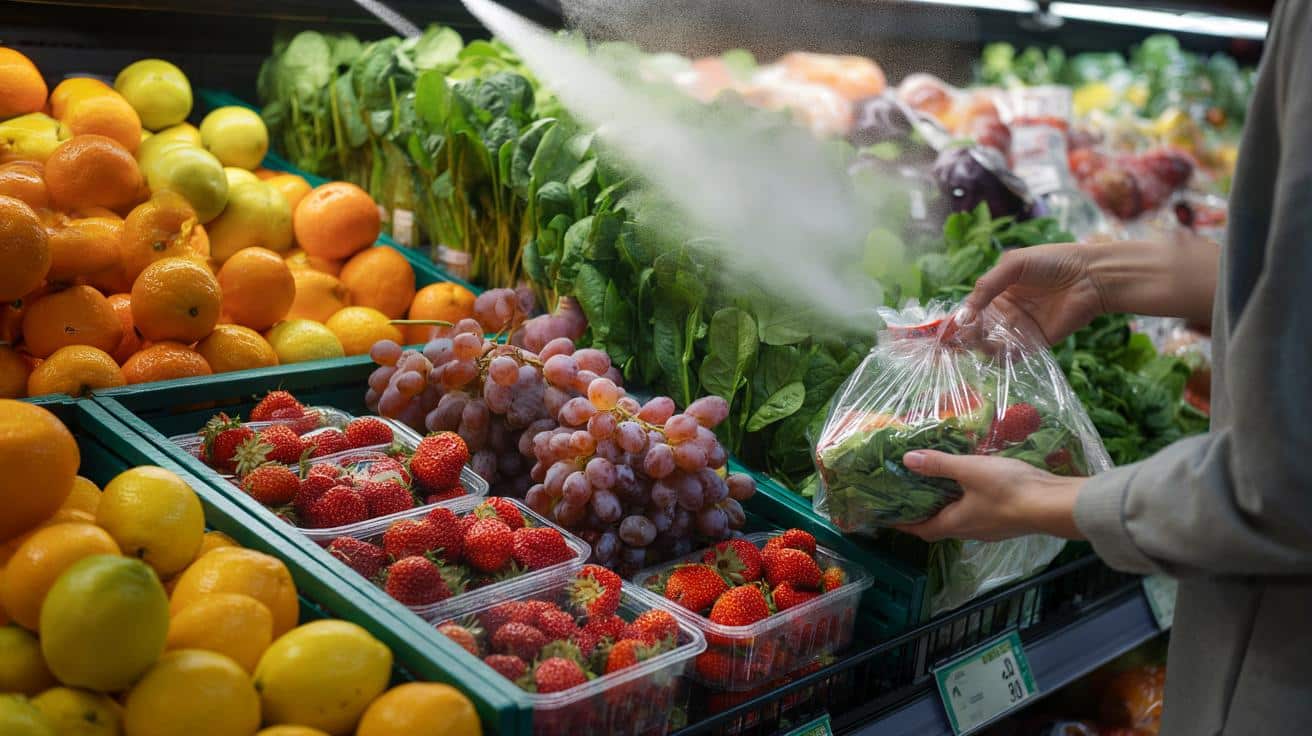
Yet the one thing we can’t see on a shiny apple or a perfect grape is the quiet layer of pesticides riding home with us. Shoppers are asking: which basket is the least complicated choice? And which items carry the highest pesticide load in UK supermarkets? That gap between what looks fresh and what’s been sprayed is where the real story sits.
It’s 6.12pm in a South London supermarket. The mister fogs the leaves on a stack of baby spinach, families hover by the berries, and a tired commuter rotates a bag of “washed and ready” salad, checking the date as if it might speak. A boy opens a punnet of strawberries and breathes in that candy smell that always means summer, even in January. We reach, we choose, we move on. No label mentions the mix of chemicals used to keep these perfect and plentiful. The cleanest-looking punnet isn’t always the cleanest. The truth hides in plain sight.
The supermarket culprits: where residues cluster
Some foods consistently show the highest pesticide levels in UK supermarket spot checks. **Grapes and berries top the charts**, with oranges and other citrus not far behind. Pre-packed salads and tender greens like spinach are also frequent flyers for multi-residue findings. Thin skins, long journeys, high pest pressure — that mix invites more spraying and more residues.
Grapes tell the story in miniature. They’re delicate, sweet, and prized for immaculate bloom, so growers defend them hard. UK government monitoring has repeatedly found a cocktail of residues on grapes and strawberries, often more than one chemical in a single sample. Citrus can carry residues on peel and wax, including imports that travel far to look flawless here in winter. Spinach? Fast-growing leaves act like blotting paper for whatever lands on them.
There’s a logic to all this. Crops with soft skins or edible leaves are exposed directly, and they bruise or rot easily, so protection ramps up. Long supply chains demand a product that holds its nerve through cooling, shipping and stacking. Maximum Residue Levels (MRLs) are trade thresholds, not safety lines for every eater on every day, and a single item can hold several different residues at low levels. The science on cumulative exposure is still evolving. Shoppers just see something green and gorgeous.
How to shop smarter without blowing the budget
Start with a simple habit: a cold-water soak with bicarbonate of soda. Use a roomy bowl, add roughly a tablespoon of bicarb per litre, and give fruit and veg 10–15 minutes, then rinse. It won’t reach systemic pesticides inside the flesh, but it’s effective at lifting some surface residues and waxes. Peeling helps for citrus, cucumbers and carrots. When money is tight, prioritise organic for the usual suspects — grapes, strawberries, spinach, fresh herbs — and go conventional for lower-risk picks like onions, avocados and peas in pod.
Season matters. UK-grown in season tends to need fewer interventions than fragile imports flown in mid-winter. Frozen organic berries can be cheaper per portion and brilliant in porridge or smoothies. Mix it up: apples one week, pears the next, berries as a weekend treat, kiwi as a midweek swap. Let’s be honest: nobody really does that every day. On a messy Tuesday, a quick rinse and a diverse basket still nudges your exposure down.
On the small mistakes: skipping a soak for “washed and ready” salad, never peeling waxed citrus you’re zesting, or assuming “organic” means no washing required. **Wash, swap, peel** — low drama, high return.
“Eat the rainbow, but choose where you spend your effort: rinse leafy greens, soak soft fruit, and rotate what’s on your plate.”
- Choose thick-skinned fruit for lunchboxes (bananas, citrus) and save berries for home.
- Buy loose when you can; it’s easier to inspect, wash thoroughly, and avoid hidden moisture.
- Use frozen organic berries for smoothies and desserts to trim costs.
- Swap pre-packed salad for whole heads of lettuce; they often carry fewer residues and last longer.
- If you zest citrus, go organic or peel generously.
The bigger picture you can taste
*We’ve all had that moment where the healthiest choice feels weirdly complicated.* Here’s the thing: fruit and veg are still a net win, and most residues sit far below legal limits. Real life asks for balance, not panic. Small shifts add up — soaking when you have time, peeling when flavour allows, buying in season, and giving preference to UK-grown where it makes sense. If your child lives on strawberries, maybe that’s your organic splurge; spend less fuss on the onions. Share tips with a neighbour, trade a spare lemon for a head of lettuce, read the pack with curiosity rather than fear. Food should be joy. And with a few habit tweaks, it still is.
| Key Point | Details | Interest for the reader |
|---|---|---|
| High-residue usual suspects | Grapes, strawberries, citrus, spinach, pre-packed salads, tender herbs | Know what to prioritise for washing, peeling or organic |
| Practical kitchen tactics | Bicarbonate soak, seasonality swaps, peel where it doesn’t hurt flavour | Low-cost, quick wins that fit a busy week |
| Smart substitutions | Frozen organic berries, whole-head lettuce, thick-skinned fruit for snacks | Save money while trimming exposure |
FAQ :
- Which supermarket fruit and veg tend to have the highest pesticide levels?In UK monitoring, grapes and strawberries often show multiple residues, with citrus, spinach, pre-packed salads and fresh herbs also recurring. Soft skins and edible leaves are the pattern to watch.
- Does washing actually remove pesticides?It can reduce surface residues and some waxes. A bicarbonate-of-soda soak (10–15 minutes, then rinse) works better than a quick splash. Systemic pesticides inside the flesh aren’t fully removed by washing.
- Is organic totally pesticide-free?No. Organic standards restrict synthetic pesticides, yet traces can appear from drift or permitted inputs. Levels are typically lower. Rinse organic produce too — dirt and microbes don’t read labels.
- Are legal residue limits the same as safety limits?MRLs set the maximum residues expected when pesticides are used correctly; they’re not personal safety guarantees for every eater. Diet variety helps manage cumulative exposure over time.
- What should parents prioritise for kids?Focus on the frequent offenders: berries, grapes, spinach and salad leaves. Buy organic when you can, rotate fruit choices, peel citrus you’re zesting, and keep a frozen-berry stash for easy breakfasts. **Small habits beat all-or-nothing thinking.**








Great breakdown — the bicarb soak tip is gold. Swapping salad bags for whole heads now 🙂