
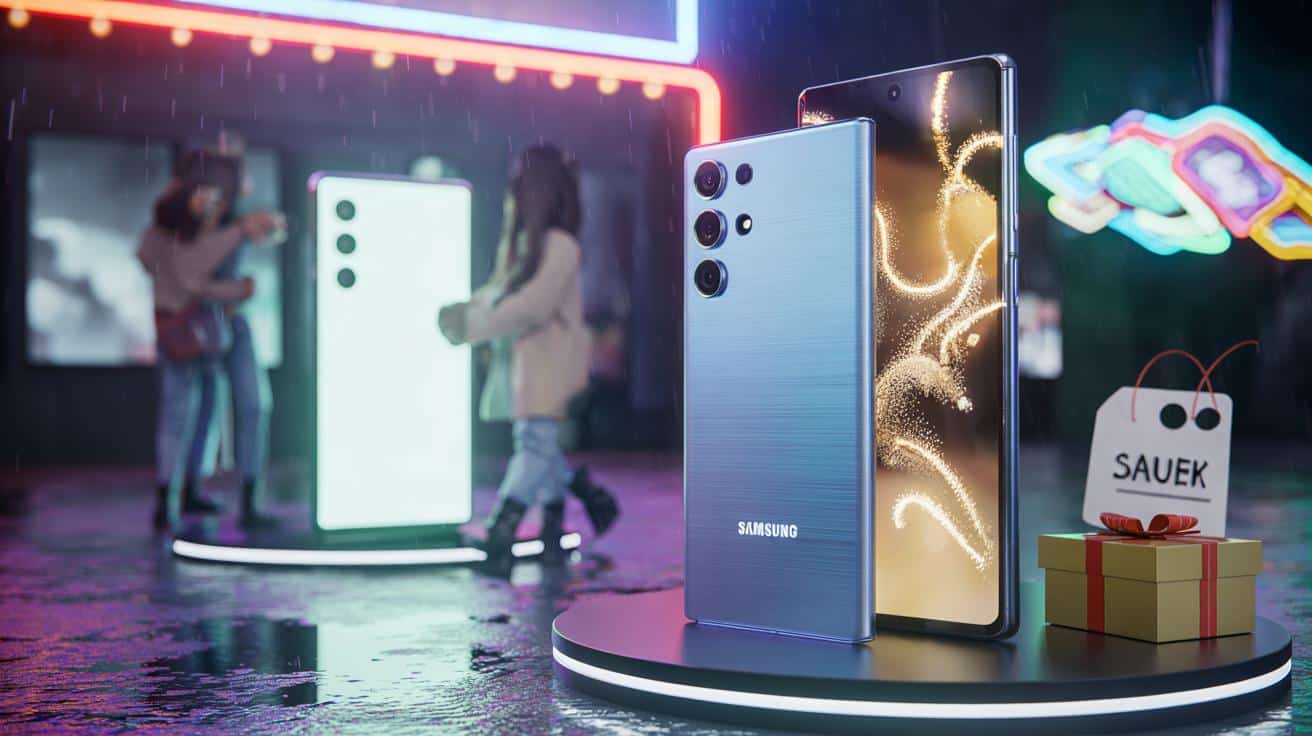
Samsung’s Ultra flagships tend to land just after New Year, but the calendar around them has changed. If the Galaxy S26 Ultra wants maximum impact, an earlier launch may no longer be a nice-to-have. It may be a survival move in a noisier, faster smartphone year.
A couple stood by the accessory wall, asking if there was a “new Samsung coming, like the really new one.” The staffer gave the stock line: January or thereabouts, do you want the S24 deal today?
I watched them shrug, glance at a Black Friday sign still taped up, and wander towards an iPhone display glowing like a wreath. The moment was small, almost throwaway. *By the time the shop lights flicked off, the decision had already been made.*
That tiny gap between curiosity and commitment is where the S26 Ultra could win — or drift.
The calendar crunch Samsung can’t ignore
Shoppers make big phone decisions between mid‑November and Boxing Day. Brands that show up then don’t just sell more devices, they plant the story in people’s heads. If the Galaxy S26 Ultra waits until late January, it enters a quieter room.
Look back at recent winters. The S24 Ultra arrived mid‑January, while Q4 shelves were stacked with aggressive S23 bundles, iPhones fresh from September, and Pixel promos lined up with payday weekends. Analysts often peg roughly a third of annual smartphone sales to Q4 in many markets, sometimes more in the UK and US. When the snow and sales hit, the window is wide and bright.
Moving the S26 Ultra to late November or early December would recast the script. Pre‑orders could ride Black Friday hype. Carriers could package festive trade‑ins that don’t feel like leftovers. **Black Friday is the battleground Samsung keeps missing.** The earlier slot also captures Lunar New Year gifting in Asia with a cleaner runway.
Chips, AI and the case for a November Unpacked
There’s a way to make a November launch stick: plan it back from the shelf. Think T‑16 weeks for camera tuning lock, T‑12 for carrier certification, T‑10 for retail training, T‑8 for content production, T‑6 for embargo briefings, T‑3 for channel load‑in, T‑0 for Unpacked. Fix those gates now, then align silicon arrival and firmware milestones to them, not the other way round.
Chip cadence is the squeeze. The next Snapdragon flagship is expected around Q4 2025, with Samsung’s own Exynos roadmap nudging performance and efficiency at 3nm and beyond. The AI arms race adds heat: on‑device models for translation, image generation and assistant features need silicon time and battery budgets. **Launch too late and you trail Apple’s September narrative; launch too early and you risk firmware wobble.** Let’s be honest: nobody actually does that every day.
One European carrier exec put it simply to me:
“If Samsung gives us S26 Ultra in November, we’ll build Q4 around it. In January, we’re rebuilding momentum from scratch.”
That blunt math points to a practical playbook:
- Stage a teaser in late October tied to AI features, not specs.
- Soft‑launch Ultra in mid‑November for pre‑orders; ship within 10 days.
- Hold base S26/S26+ to January to extend the story and avoid self‑cannibalisation.
- Secure a 2–3 week exclusivity window on next‑gen Snapdragon bins or lean on Exynos in select regions.
What an earlier S26 Ultra would change
Move the date and you shift behaviour, not just a press event. Retail teams plan calendars months ahead; give them a hero in November and they’ll rebuild endcap space, ad flights, and trade‑in ladders around it. Enthusiasts won’t mind the earlier drop; they’ve been ready since summer rumours. The broader audience will simply see the newest Samsung at the very moment their wallets are open.
There are risks. Shortening the development cycle can nick camera tuning and battery optimisation if discipline slips. Accessory partners need final CADs locked by late summer. One UI needs a stable branch early so AI features don’t feel like a beta in a £1,200 phone. We’ve all had that moment when a software update lands the day you unbox and you wonder if you bought too soon.
Get the choreography right and the upside is larger than a busier December. An S26 Ultra that lands before Christmas could set the tone against iPhone 17 chatter, hold pricing power, and warm the funnel for S26 and S26+ in January. **It’s less a date change than a mindset change.** Carriers will line up; consumers will notice; rivals will be forced to chase the calendar. The story becomes yours.
There’s another layer here: emotion and timing rarely travel alone. People upgrade when contracts end, when bonuses hit, when a family member needs a hand‑me‑down that actually feels like a gift. Pulling S26 Ultra forward aligns with all of that human messiness — holidays, year‑end budgets, the quiet thrill of new tech as the year turns. It also relieves the awkward January lull where attention is low and credit cards are cold.
In practical terms, a November Unpacked doesn’t mean rushing. It means deciding sooner. Lock the AI features that truly change the day — offline summarisation, camera‑to‑notes workflows, translation that feels instant — and stop chasing marginal party tricks that burn silicon and battery. Frame Ultra as the tool that does the heavy lifting without a cloud round‑trip.
Then be brave on pricing and trade‑ins. A cleaner, earlier deal — generous old‑device values, transparent carrier offers, fewer SKU confusions — will resonate more than a dozen small rebates. **When the message is simple, the choice is simple.**
Where this leaves Samsung — and us
Slide the S26 Ultra into November and the winter landscape shifts. Apple still owns September, but its glow fades by mid‑November as deals blunt the shine. Pixels get their early autumn moment, then pass the mic. Chinese brands push waves around Singles’ Day and Lunar New Year. A Samsung flagship right between those tides would feel inevitable, not rushed.
It also opens space for a steadier story. Ultra first for the enthusiasts and gift‑givers, then the broader S26 family in January for those who browse in the sales and upgrade when the calendar does. Marketing breathes. Retail breathes. The software team breathes because it knows the locks and the stakes.
Will Samsung move? The company is famously disciplined with its Unpacked rhythm, and the silicon supply puzzle is real. The market, though, is louder and faster than it was when January felt clever. A November S26 Ultra would meet shoppers where they already are — in the queue, in the rain, hunting for something worth the splurge. The moment is small. The outcome isn’t.
| Key Point | Details | Interest for the reader |
|---|---|---|
| Black Friday window | Launching in November captures peak Q4 demand and mindshare | Better deals, faster delivery, more exciting upgrade timing |
| Chip and AI cadence | Align silicon availability with on‑device AI that feels finished, not demo‑ware | Real‑world gains in battery life, camera, translation and productivity |
| Two‑stage rollout | Ultra in November, S26/S26+ in January to extend the narrative | Clear choices for enthusiasts now and mainstream buyers later |
FAQ :
- When could the Galaxy S26 Ultra realistically launch?Based on recent cycles, late January is typical, yet a mid‑to‑late November launch is plausible if Samsung locks silicon and software earlier.
- Why would Samsung move earlier?To capture Black Friday momentum, shape the holiday narrative, and pre‑empt rivals’ AI stories while attention is highest.
- Will the chips be ready that soon?Industry chatter points to next‑gen Snapdragon and Exynos parts arriving in Q4; the question is allocation and firmware maturity, not raw availability.
- Would an earlier date hurt quality?Only if milestones slip. A backward‑planned schedule with earlier camera and AI locks can keep polish intact.
- How would this affect pricing and deals?Expect stronger trade‑ins and cleaner bundles in November, then broader promotions in January as the wider S26 family lands.







This makes a ton of sense—Black Friday is the battleground Samsung keeps missing. If Ultra lands in mid‑November, pre‑orders could ride the hype and actually feel relevant. Please just lock the AI features early and ship polished. Fingers crossed 🙂